 Free eLearning Platform
Your Emotions Are a Choice: A Conversation with Professional Driver Ross Reynolds
By Rodolfo Giacoman, Fatigue Management Specialist, Commercial Vehicle Safety Alliance
Originally published in the 2026 Third Quarter Guardian, Pages 38 - 39
- What can four decades behind the wheel teach us about safety, fatigue and leadership?
- Meet Ross Reynolds, a 4-million-mile, crash-free driver whose philosophy turns emotional control and fatigue management into powerful safety tools.
- Discover how technology, daily habits and strong relationships helped shape an extraordinary career—and a lasting legacy in trucking.
Estimated Reading Time: 6–7 minutes
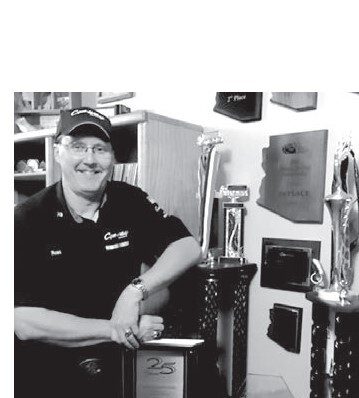
Professional drivers play a critical role in roadway safety, and few exemplify that responsibility better than Ross Reynolds, the first recipient of CVSA’s International Driver Excellence Award (IDEA). After a 40-year career with XPO Logistics, formerly Con-way Freight, Ross retired this year with more than 4 million crash-free miles, a reputation for excellence and a lasting impact on the drivers he mentored throughout his career. In Tucson, Arizona, many know him simply as "Coach."
I recently had the opportunity to speak with Ross about his career, fatigue management, mentoring drivers and the lessons he learned over four decades behind the wheel. What stood out most wasn't his impressive list of accomplishments. It was his humility, commitment to helping others and a simple philosophy that guided both his professional and personal life.
You can watch the conversation at www.nafmp.org/webinars or listen to it in the North American Fatigue Management Program (NAFMP) podcast at www.nafmp.org/#podcast.
A Career Defined by Professionalism
Ross began driving while still in high school, operating a box truck in the late 1970s. After spending a short time working on aircraft electronics for Learjet, an economic downturn led to a large layoff. A freight manager offered advice that would shape the rest of his career: "If you learn how to drive a truck, you'll never be out of a job." Ross took that advice to heart.
He spent four decades with XPO, becoming a trusted driver, trainer and mentor. In 2011, he was selected for a district safety manager position. However, when Cathy, his wife of more than four decades, faced a serious medical crisis that resulted in a lengthy hospital stay, he chose family over career advancement and returned to a role that allowed him to support her more directly.
More recently, when the company asked him to extend his retirement date, he agreed to stay through February before retiring to spend more time caring for her at home. His decision reflects a theme that surfaced repeatedly throughout our conversation: Success is important, but people come first.
Excellence Behind the Wheel and Beyond
Ross became the first IDEA recipient in 2015, a recognition reserved for professional drivers who demonstrate exceptional safety performance, leadership and character. His competitive driving record is impressive. He was a three-time finalist for the American Trucking Associations’ America's Road Team and spent a decade finishing among the top competitors at Arizona's truck driving championships. Since 2014, he has helped design the state's championship driving courses, sharing his expertise with future generations of competitors.
Yet, Ross is most proud of helping other drivers succeed. Throughout his career, he devoted countless hours to coaching and mentoring fellow drivers, helping them sharpen their skills, improve their safety performance and achieve their own professional goals. Even after retirement, he continues to answer questions, provide guidance and support the next generation of professional drivers.
Managing Emotions and Managing Risk
One lesson Ross shares with every driver: "I learned a long time ago in life, trucking and marriage and everything else: Emotions are a choice.” He added, "When somebody cuts you o., yells at you, honks at you or whatever, you can choose to get angry, or you can choose to back out of the throttle and let them go and just go on your merry way. I believe it is crucial to educate future truck drivers on etiquette and professionalism."
The philosophy traces back to a book his mother-in-law used in women's Bible study titled "Your Emotions Are a Choice." Ross and Cathy read it together and consciously applied it to their lives. He taught the same principle to every driver he trained. “Professional drivers,” he said, “bear a special responsibility precisely because they have a choice about how to respond, and their responses affect everyone around them.” For Ross, emotional self-management is more than a life lesson. It's a safety strategy. Drivers who can manage frustration, anger and stress are better equipped to make sound decisions behind the wheel. It's a message that should resonate with all of us when driving.
Technology as a Coaching Tool
Ross was deeply involved in rolling out electronic logging devices at XPO's Tucson operation, helping to cut a cumbersome training session in half after staying up past midnight to rebuild the curriculum from scratch. The transition from paper logbooks made life considerably easier for supervisors who had previously tracked each driver's hours of service by hand.
Later, when in-cab cameras and drive-cam systems were introduced, Ross saw something the paper logs could never have shown him: Drivers falling asleep at the wheel. “We started noticing driving behaviors and camera recorded events consistent with fatigue, including drivers appearing to fall asleep,” he said. "It was still an issue. It was just a few drivers who regularly wouldn't get enough rest before they came in to go to work."
When the camera captured a fatigue event, such as a driver drifting toward the edge of the road, a sudden jerk of the wheel or unexplained hard braking, Ross would bring the driver in and show them the 12-second video. "It was, no pun intended, a real eye opener for them," he said. "Watching their eyes closing, their head bobbing up and down, they couldn't believe they were actually doing that."
Most of the time, seeing the footage was enough to change behavior. When it was not, XPO applied progressive discipline. And when drivers repeatedly refused to engage with coaching, Ross offered a candid assessment: "Maybe this isn't the job for that particular person." Ross emphasized that repeated fatigue-related incidents require serious intervention because fatigue poses a significant safety risk to both the driver and the public.
For companies that have not yet invested in cameras, Ross recommended monitoring driving hours, tracking how long it takes drivers to complete familiar routes, providing fatigue awareness training and, above all, training supervisors to recognize the signs of fatigue so they can keep impaired drivers o. the road.
"There's been several times when they've actually sent drivers home, knowing full well they were too fatigued to drive," he said.
Recognizing and Addressing Fatigue
Ross offered a checklist that any driver can use to self-assess in real time. Warning signs include struggling to focus, missing traffic signals, failing to recall the last few miles driven, being unable to remember the last four or five vehicles that passed, neglecting to check mirrors or gauges and excessive yawning or blinking. "The driver needs to recognize those and actually do something about it," Ross said. "He has to make a choice to pull the truck over and get some rest." These warning signs are consistent with many fatigue indicators identified in driver fatigue research and in NAFMP.
For milder drowsiness, he recommended several countermeasures: Listening to engaging podcasts over passive music, turning down the cabin temperature, keeping the cabin air filter clean to circulate fresh air and eating a light, nutritious snack, not anything that will trigger a sugar crash 20 minutes later. Water is generally a better choice for hydration than highly caffeinated beverages. While moderate caffeine consumption is not typically dehydrating for habitual users, excessive caffeine can contribute to sleep disruption and may mask underlying fatigue.
But the single most powerful insight Ross shared may have been the one he offered about sleep. He taught every new line driver to go to bed at the same time every night, even on weekends, to maintain a stable circadian rhythm. "Maintaining a regular sleep schedule is extremely important," he said. While sleep regularity helps stabilize the body's circadian rhythm, adequate sleep duration remains essential for alertness, health and safe driving.
His daily routine also aligned perfectly, though unrehearsed, with the five pillars of wellness the NAFMP teaches: exercise, nutrition, mindfulness, sound sleep habits and positive relationships. For Ross, the physical demands of city driving, climbing in and out of the trailer at every stop, and working in Arizona heat that can reach 125 degrees inside a trailer, provided natural exercise. He ate well, protected his sleep schedule and observed the Smith System's five keys: aim high in steering, get the big picture, keep your eyes moving, leave yourself an out and make sure they see you.
The Importance of Relationships
Throughout our conversation, Ross repeatedly credited others for his success, especially Cathy. She supported him throughout his career and even helped write his acceptance speech when he received the IDEA. His mother-in-law, Debbie, moved in with the couple in 2016 to help care for Cathy while Ross was on the road and, at 85, is still an active and beloved presence in the household.
Near the end of our conversation, I asked Ross how he managed to develop such a strong relationship with his mother-in-law. He didn't hesitate. "Take care of her daughter."
Throughout his career, Ross built a reputation for taking care of people – his family, his coworkers, the drivers he mentored and everyone who had the opportunity to learn from him. His legacy extends beyond awards, miles driven or competition results. It can be seen in the drivers he coached, the safety culture he helped strengthen and the example he set for the commercial motor vehicle industry.
His career makes the case that safety and longevity in this industry are not accidents. They are the products of daily routines, an unshakable personal philosophy, smart use of technology, strong relationships and, above all, the deliberate choice to treat the roads and the people on them with the same care you would extend to your own family.
Thank You to the IDEA Sponsor
IDEA is sponsored by PrePass Safety Alliance, a non-profit, public-private partnership of state agencies and trucking industry leaders devoted to safe, secure and efficient use of North America’s highway system. This is the tenth year that PrePass Safety Alliance has sponsored the International Driver Excellence Award.
More Reading