
 Free eLearning Platform
Behind the Wheel and Under Pressure: Musculoskeletal Risks in a High-Tech Trucking World
By Mark Samber, Independent Industry Advisor
Originally published in the 2025 Fourth Quarter Guardian, pages 66-67
- Technology is transforming trucking operations — but is it silently increasing musculoskeletal risk behind the wheel?
- From ELDs and touchscreens to automation and fatigue monitoring, innovation is reshaping driver ergonomics.
- This analysis examines the hidden physical costs of high-tech fleets — and the strategic implications for safety and liability.
- Smart innovation must protect driver longevity, not compromise it.
Estimated reading time: 6–8 minutes.
Does the implementation of technology in trucking operations contribute to an increase in musculoskeletal injuries?
Technology in the trucking industry has brought significant changes through GPS tracking and automated transmissions alongside onboard cameras and electronic logging devices (ELDs). The digital revolution in logistics and safety enhances operations, yet it also raises concerns about whether this change leads to more musculoskeletal injuries among drivers.
The answer isn’t straightforward. In some cases, technology has alleviatedphysical strain. But in others, it has introduced new ergonomic risks or amplified existing ones. The industry must grasp the complex link between trucking technology and driver health as automation becomes a reality.
Tech-Induced Ergonomic Strain
Several beneficial technologies may, in theory, cause unintended physical strain during operation.
Electronic Logging Devices (ELDs)
ELDs have become mandatory throughout North America because they monitor driver hours to enforce regulations. The technology may restrict driver flexibility through rigid scheduling, limiting their opportunities for rest. As a result, drivers face time constraints, leading them to skip stretching.
Touchscreen Interfaces
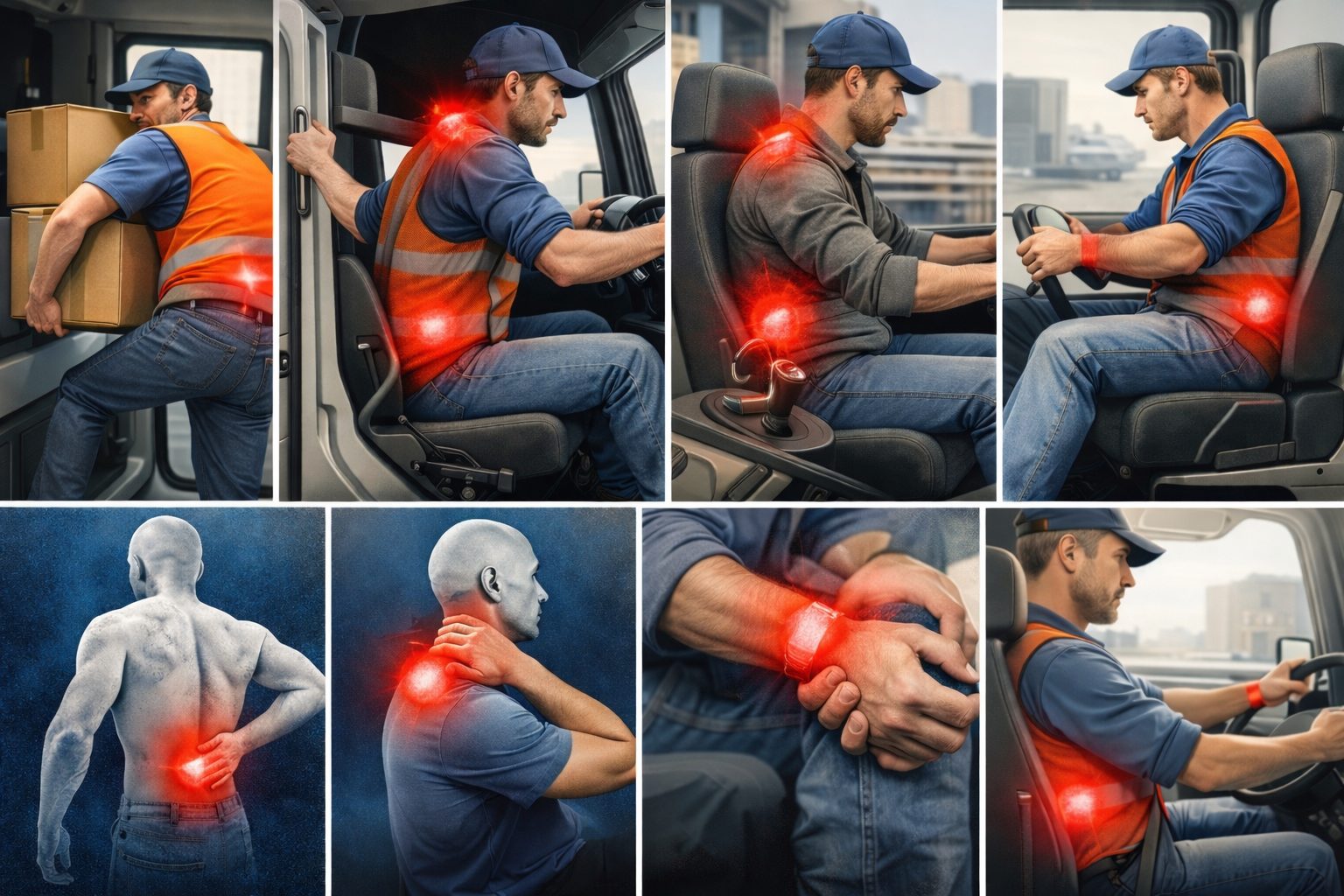
Trucks from today's market use complicated digital panels that need drivers to perform multiple interactions. Drivers perform repetitive hand movements while maintaining uncomfortable wrist positions during wide console reaches, which can lead to carpal tunnel syndrome and shoulder and neck strains.
Camera Monitoring Systems
Rear- and side-view cameras can mitigate potential accidents, yet they require drivers to perform uncomfortable movements and body adjustments when looking at multiple displays. Repetitive twisting movements can lead to lower back pain, and excessively glancing at a screen can also increase neck strain.
Cognitive Overload and Physical Consequences
Truck drivers now face elevated cognitive demands due to technologicaladvancements. The combination of real-time tracking and multiple communication devices, along with alerts, produces heightened mental stress for truckers. Physical symptomsappear as the body develops tense muscles due to constantalertness. The mental pressure from technology poses physical health risks because stress functions as a risk factor for developing chronic pain conditions.
Automation: A Double-Edged Sword
Automated driving systems, together with automated loading equipment, function as tools that promise to reduce physical workload. These systems decrease both manual tasks and physical work, yet this reduction in physical activity creates a new challenge, as extended sitting weakens the muscles in the core region.
The absence of movement produces stiff joints and decreases blood circulation throughout the body. Technology designed for an easier life sometimes produces less overall body movement, which acts as a primary factor in musculoskeletal injuries (MSKIs).
When Technology Helps
Not all tech is detrimental. In fact, several advancements actively combat MSKIs.
The combination of ergonomic seat design features, such as lumbar support and vibration reduction, and adjustable seat settings creates a system that decreases spine and hip discomfort. Advanced suspension technology in cabs successfully reduces the total body vibration experienced by drivers. Health monitoring technologies designed for wearability enable some fleets to provide drivers with fitness trackers that monitor activity levels and fatigue. The implementation of voice-controlled systems reduces driver physical contact while maintaining proper driving posture.
A Growing Concern in Industry Data
Industry surveys show an alarming trend over the last few years: A substantial portion of drivers have developed shoulder and wrist discomfort from operating technology-based controls.
Companies that operate newer fleets experience more screen-related neck complaints from drivers than the traditional analog cabs, and data has shown a relationship between technology use and ergonomic design problems in cab spaces, which demand new ergonomic assessments.
Designing with Drivers in Mind
Thoughtful design remains essential to ensure technology functions as a health-supporting tool for drivers.
The placement of screens and buttons in natural reach zones during interface design development helps reduce physical strain. The ELD system should implement scheduling algorithms that generate personalized break suggestions by analyzing driver movement data. Driver training should include teaching them both how to use technology properly and how to maintain good posture, as well as practicing stretching and ergonomic techniques.
Final Thoughts
The implementation of technology in trucking operationswill continue because it delivers significant advantages. Current technological advancements have delivered substantial improvements in safety standards, operational efficiency and regulatory compliance. The fast pace of technological development requires close monitoring to prevent safety problems from shifting from one issue to another.
The combination of technology with human body functions during real-world operations leads to MSKIs because of static postures, repetitive movements and exposure to vibrations. The analysis of physical strain represents only one aspect of the total equation. The protection of the driver’s well-being requires integrating fatigue management into the overall safety strategy.
Fatigue risk assessments help organizations detect dangerous routes and shift schedules as well as environmental elements that create hazards. The success of driver fatigue prevention depends on education and training programs that teach drivers to detect signs of fatigue and develop better sleep practices. Real-time driver fatigue monitoring is now possible through emerging technologies that combine biometric sensors with in-cab alert systems. The process of involving drivers in fatigue policy development creates ownership and produces strategies that reflect actual operational needs.
These integrated initiatives help decrease fatigue-related incidents while simultaneously addressing the physical impacts of extended work hours and technological workflow demands. The adoption of innovation requires us to maintain safety standards for drivers at the same level as before.
The industry needs to innovate with empathy to develop tools that support the physical demands of driving and foster driver longevity.
More Reading

(Mostly) Everything Relates to Fatigue